

How to Prepare Your Lawn Tractor for Fall Cleanup: Baggers, Mulch Kits & Leaf Cleanup Tips
When most people think about their lawn tractor, they think about cutting grass.
But once the leaves start falling, your lawn tractor can become one of the most useful tools you own.
Instead of spending your weekends raking, blowing and dragging tarps full of leaves across the yard, the right lawn tractor setup can help you mulch, collect and clean up leaves while you drive.
So, should you mulch your leaves or bag them? Can a lawn tractor actually pick up leaves? And what should you do to get your tractor ready for fall?
Here’s what you need to know.
Can You Use a Lawn Tractor to Pick Up Leaves?
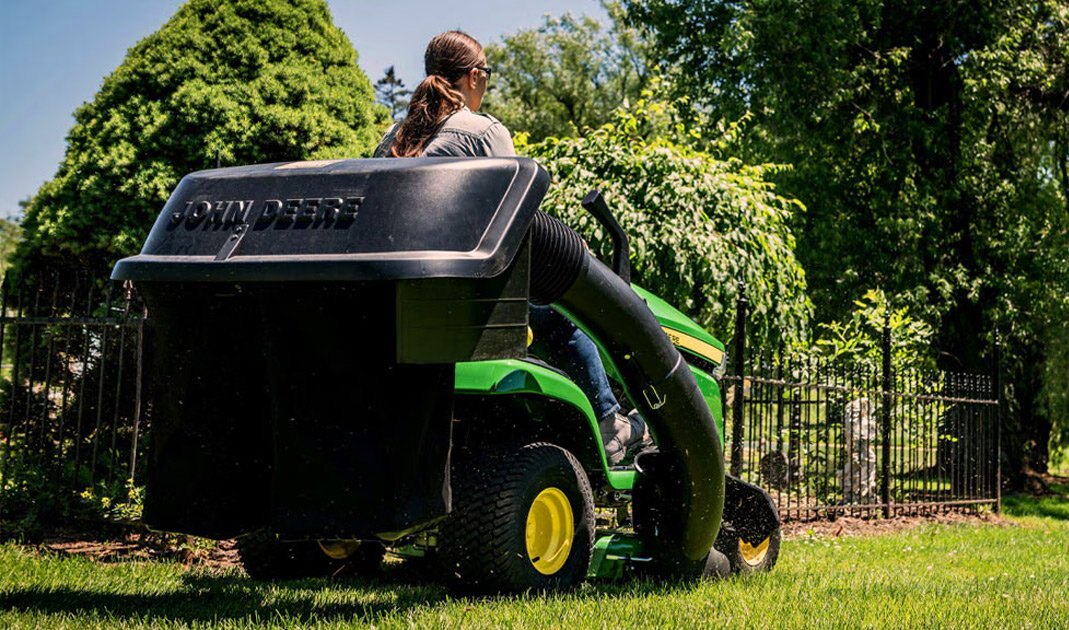
Yes. With the right bagger or material collection system, many lawn tractors can collect leaves while you mow.
Rather than raking the entire property by hand, the mower deck cuts and moves the leaves through a chute into bags or a collection system mounted behind the tractor.
John Deere, for example, offers material collection systems designed to collect both grass clippings and leaves. Depending on the tractor and mower deck, different bagger configurations are available.
For properties with mature trees or larger lawns, a bagger can dramatically change the way you approach fall cleanup.
Instead of:
Blow the leaves.
Rake the leaves.
Pile the leaves.
Move the leaves.
You can simply drive.
Is It Better to Bag or Mulch Leaves?
The answer is: it depends.
Both are great options, and the condition of your lawn should determine which method you use.
Mulch Leaves When There Is a Light to Moderate Covering
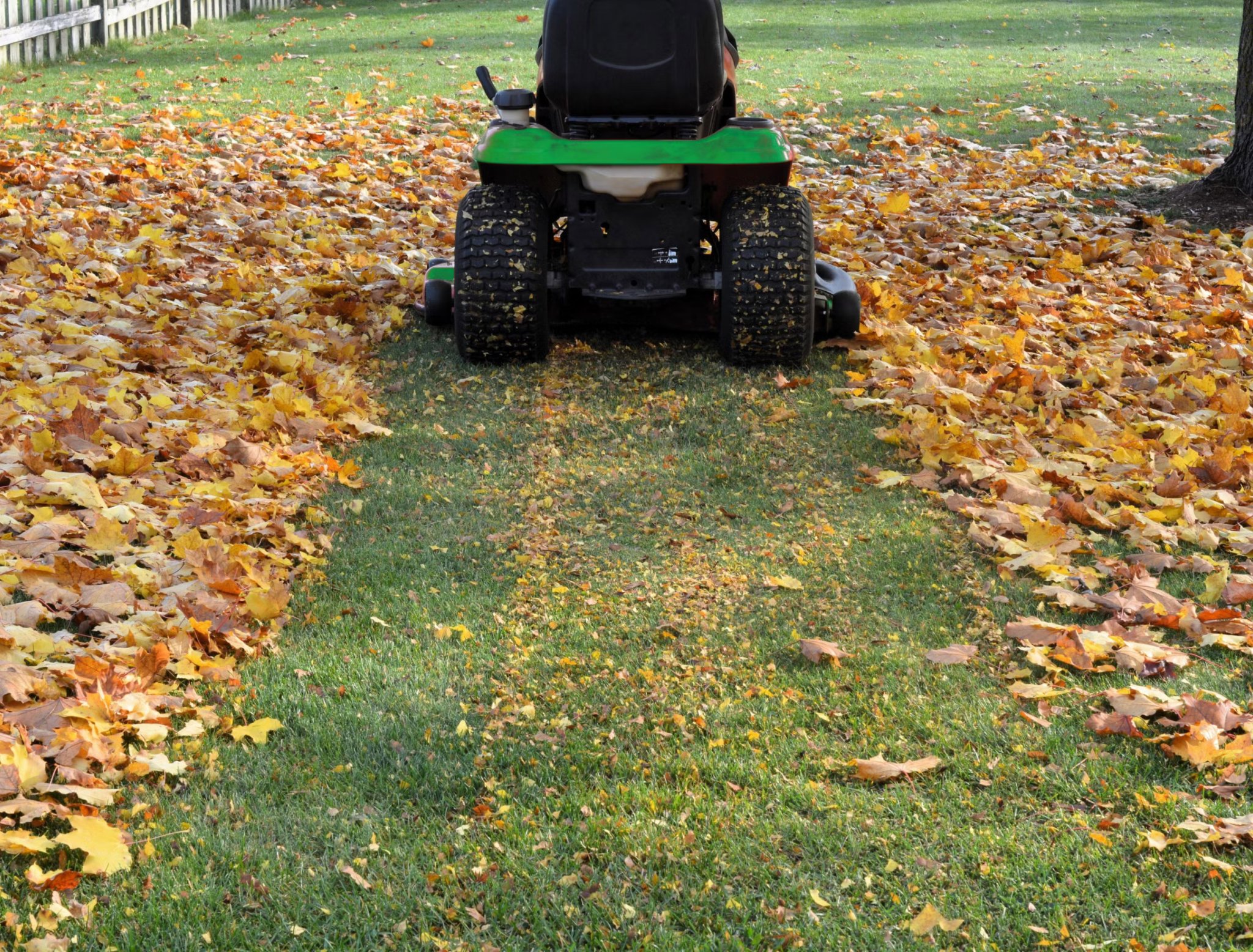
If leaves are relatively dry and aren't completely covering the lawn, mulching can be one of the easiest ways to deal with them.
A mulch kit keeps material circulating underneath the mower deck so the blades can chop it into much smaller pieces before returning it to the lawn.
John Deere's mulching systems are specifically designed to reduce grass and other material into small particles rather than requiring everything to be collected and disposed of.
Instead of collecting 20 bags of leaves, you're essentially turning them into much smaller material that can settle between the grass blades.
Bag Leaves When They're Heavy
There comes a point when there are simply too many leaves to mulch effectively.
If your lawn disappears underneath a thick blanket of maple leaves every October, collection is probably going to make more sense.
John Deere specifically cautions that a thick layer of mulched leaves can block sunlight from reaching the grass and potentially smother it. Their mowing guidance recommends making multiple mulching passes when necessary.
This is where a bagger really earns its keep.
Collect the heavy stuff and mulch the lighter material.
You don't necessarily have to choose one strategy for the entire fall.
Do Lawn Tractor Baggers Work Well for Leaves?
They can work extremely well when they're properly set up.
Your mower deck is doing more than simply sucking leaves off the lawn. The blades are cutting the material and creating airflow that helps move it through the chute and into the collection system.
Some John Deere material collection systems also use a Power Flow blower to help move material through the chute and into the hopper.
There are a few things you can do to improve performance.
Don't Wait Until the Lawn Is Buried
One of the easiest fall cleanup tricks is simply to mow more frequently.
Instead of waiting three weeks and tackling every leaf at once, run the tractor over the property periodically as the leaves fall.
Smaller cleanups are generally much easier to manage than one enormous cleanup at the end of the season.
Try to Work With Dry Leaves
Anyone who has picked up a pile of wet leaves knows the difference.
Wet leaves are heavy, sticky and much more likely to clump together.
If you have the choice between doing your cleanup immediately after a heavy rain or waiting for things to dry out, give the lawn some time.
Your tractor will thank you.
Keep Your Blades Sharp
Your mower blades matter during fall cleanup too.
Sharp blades help cut material effectively, while dull blades can reduce mowing performance. John Deere recommends keeping mower blades sharp as part of achieving good mowing performance.
If you've been mowing all summer on the same set of blades, fall is a good time to inspect them.
Slow Down When the Leaves Get Heavy
More speed doesn't necessarily mean faster cleanup.
When you're driving through a heavy layer of leaves, give the mower deck time to process the material.
Slowing your ground speed can help the deck work through heavier material instead of trying to swallow everything at once.
The same principle applies when mowing heavy or tall grass. John Deere recommends reducing travel speed in more demanding mowing conditions.
Raise Your Mower Deck
You don't need to scalp the lawn to collect leaves.
A slightly higher mowing height can help when mulching leaves. John Deere notes that taller grass heights can make it easier for mulched leaves to disperse into the lawn.
Your ideal height will depend on your grass, conditions and equipment, but the goal isn't to give the lawn one final ultra-short haircut.
You're trying to process the leaves while keeping the grass healthy heading into winter.
Mulch First, Bag Second
Here's a trick worth trying if you have a lot of leaves.
Instead of immediately trying to collect large, whole leaves, make a mulching pass first.
That can reduce the size of the material considerably.
Then, if there's still too much material sitting on the lawn, collect the excess.
You may end up with significantly less volume to haul away.
What Is a Mulch Kit?
A mulch kit changes how material moves underneath your mower deck.
Rather than immediately discharging the clippings and leaves, the deck keeps them circulating so they can be cut into smaller pieces.
Depending on your John Deere mower deck, a dedicated mulch kit or MulchControl system may be available. Some MulchControl systems allow the operator to switch between mulching and side discharge using a lever on the mower deck.
That versatility is particularly useful in the fall.
Light leaves?
Mulch them.
Heavy leaf fall?
Switch your strategy and collect them.
Bagger vs Mulch Kit: Which One Should You Buy?
If you're trying to decide between a bagger and a mulch kit for your lawn tractor, think about your property.
Choose a mulch kit if you have a moderate amount of leaves, don't want to dispose of bags of material and want a relatively simple way to keep the property looking clean.
Choose a bagger if you have lots of mature trees, regularly deal with heavy leaf cover, want an exceptionally clean finish or have somewhere useful to put the collected material.
And if you have a larger property with lots of trees?
Having the ability to do both can be incredibly useful.
Just remember that attachment compatibility matters. Not every bagger or mulch kit fits every tractor and mower deck, and some configurations require different blades or other components. For example, certain John Deere bagger setups specify particular blades and ballast requirements.
That's one reason it's worth checking your exact tractor and mower deck before ordering an attachment.
Don't Throw Those Leaves Away
If you're collecting leaves, don't automatically think of them as garbage.
Collected leaves can be useful for composting, garden beds and other applications around the property once properly broken down.
If you already maintain a compost pile, your lawn tractor might become your new delivery vehicle.
Suddenly fall cleanup isn't just about getting rid of leaves. You're moving organic material somewhere it can actually be useful.
Get Your Lawn Tractor Ready for Fall
Your tractor has probably already spent months mowing.
Before asking it to tackle fall cleanup, give it a quick check.
Inspect your blades. Check the mower deck and clean out accumulated grass. Look over belts. Check tire pressure. Make sure your bagger, chute or mulch kit is installed correctly. And follow the maintenance recommendations for your particular machine.
Fall is also a great time to think ahead.
Once the leaves are gone, snow isn't usually far behind in Ontario.
Depending on your tractor, that may mean removing the mower deck, preparing the machine for storage or getting your winter attachments ready.
Turn Fall Cleanup Into a Tractor Job
Nobody buys a property because they dream about spending every October weekend holding a rake.
If you already own a lawn tractor, make it work for you.
A bagger can turn your tractor into a leaf collection machine. A mulch kit can eliminate much of the collection altogether. And a few changes to how you mow can make fall cleanup considerably easier.
The trick is choosing the right setup for your lawn, your trees and your tractor.
Get Your Lawn Tractor Ready at Byers Equipment Motorsports
Not sure whether you need a bagger, mulch kit or another attachment?
Talk to the team at Byers Equipment Motorsports in Orillia.
Tell us what tractor you have and what your fall cleanup looks like. We can help determine what attachments are compatible with your machine and find a setup that makes maintaining your property easier.
Because your lawn tractor doesn't have to stop working when the grass stops growing.
Category Name
Blogs
Manufacturer Qty
0

| Monday - Friday | 9:00AM - 5:00PM |
| Saturday | Closed |
| Sunday | Closed |
THIS SATURDAY MORNING, February 21st - Starting at 9:00 am
-------------------------------------------
.
Reserve your ride time here -->> https://shorturl.at/Vc1iu
.
Come and try out some 2026 Polaris Snowmobiles including 3 sleds with DYNAMIX suspension.
.
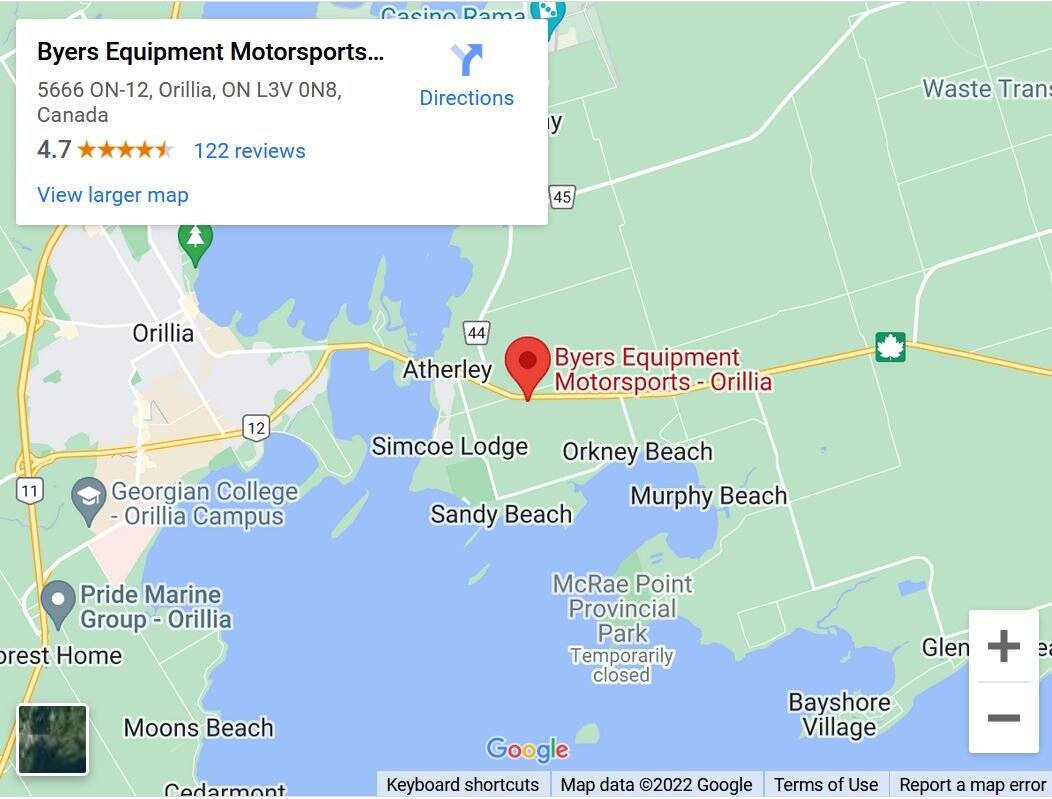
We are located at 5666 Hwy 12, Orillia and are right on Trail 207. Ride your sled or drive your vehicle to the Event.
Sign Up will be located at the right side of the building.
.
Demo Sleds:
- 9R Assault 146
- 650 VR1 137 Dynamix (x2)
- 850 VR1 137 Dynamix
- 850 Titan Adventure
- S4 Adventure 137 (4-stroke)
.
**NOTE: Must be 21 years of Age with a Valid Drivers License to ride. Bring your own gear.**
.
No pressure to buy, just come and experience the ride!
.
5666 Highway 12
1 Miles East of Orillia
705-325-2746
www.byersequipment.com
Byers Equipment Motorsports.
5666 Hwy#12
Orillia, On L3V 0N8
Phone: (705) 325-2746
Quick Links
Hours
Monday - Friday
9:00AM - 5:00PM
Saturday
Closed
Sunday
Closed
Location